
Whale Watching Trincomalee: East Coast Giants
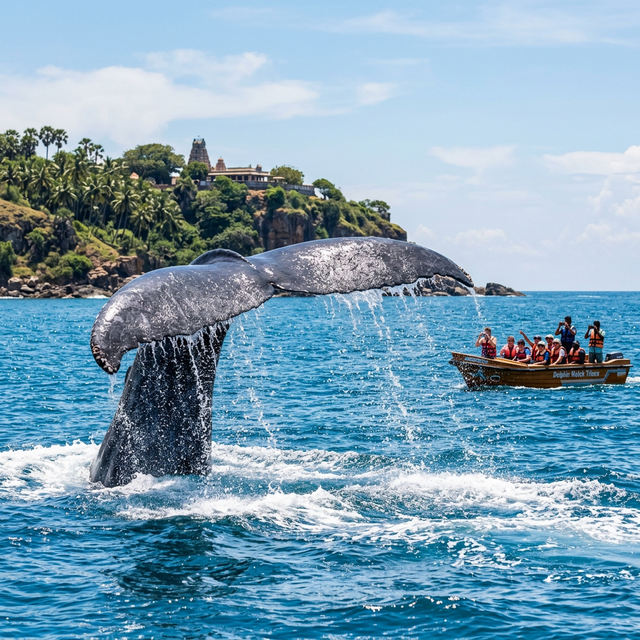
While Mirissa in the south gets most of the marine wildlife attention from December to April, the East Coast is the place to be during the northern hemisphere's summer. Whale watching in Trincomalee offers a chance to see Blue Whales in calmer, spectacular waters.
The East Coast Migration
As the monsoon hits the south-west coast (making the ocean choppy), the weather in Trincomalee—specifically near Nilaveli and Uppuveli beaches—becomes perfect. The peak season to spot whales here is from May to October.
- Because the continental shelf drops off so dramatically near Swami Rock, whales come very close to the shore to feed.
- The waters here are exceptionally clear, sometimes allowing for better underwater visibility if you are near the whales.
- Compared to the bustling southern ports, Trincomalee sees fewer tourist boats, making the experience feel more wild and exclusive.
Combining History and Nature
Trincomalee is unique because it combines incredible marine life with ancient history. You can literally stand on the cliffs at the ancient Koneswaram Hindu Temple (Swami Rock) and spot whales blowing in the ocean below.
Getting Across the Island
Traveling from Colombo Airport to Trincomalee takes about 6 hours. It is a long journey, often taken after a long flight. Ensure you start your east coast adventure comfortably by booking a spacious, air-conditioned private taxi rather than enduring a cramped overnight bus.
Book Your Reliable, Fixed-Rate Sri Lanka Airport Taxi Now
Travel with Peace of Mind!
Book Now: +94 765 603 961Blue Whales Off Trincomalee — The Facts
Trincomalee's whale watching season runs from March to October, when blue whales — the largest animals on Earth — feed in the deep ocean trench off the northeast coast. The underwater canyon off Trincomalee drops sharply to over 1,000 metres within a few kilometres of the coast, creating ideal conditions for concentrating the krill and squid that blue whales consume. Sightings are remarkably consistent during peak months (April–August), with most boats reporting encounters on over 80% of trips.
Sperm whales are also regularly sighted, along with spinner dolphins in pods of 50–200 animals. Fin whales and Bryde's whales make occasional appearances. Trincomalee's whale watching is considered among the most reliable in the world precisely because the deep water is so close to shore — boats reach the whale zone in under an hour rather than the 3–4 hour transits required in some other destinations.
Choosing a Whale Watching Operator
Around 15 operators run whale watching tours from Trincomalee harbour. Quality varies significantly. Look for operators using fibreglass speedboats (faster and drier than wooden dhonis), carrying life jackets for all passengers, and limiting group sizes to 15 or fewer. Reputable operators include Raja and the Whales, Trinco Blu by Cinnamon, and several independent captains recommended by local guesthouses.
Tour prices range from Rs 4,000 to Rs 8,500 per person for a 4–6 hour trip including light refreshments. The cheapest operators tend to use older, slower boats and larger groups. For photography, smaller boats that can manoeuvre closer to whales are worth the extra cost. Always ask what happens if you do not see whales — most reputable operators offer a free return trip or partial refund.
- Best months: April, May, June — highest blue whale sighting probability
- Depart by 6:30 AM to reach the whale zone at first light when seas are calmest
- Take seasickness tablets the night before if you are prone — the ocean swell can be significant
- Bring sunscreen, a hat, and a light jacket — even in summer, spray at speed is cold
Getting to Trincomalee
Trincomalee is approximately 265 km from Colombo — about 5.5 hours by road via the Cultural Triangle. A private taxi from Colombo to Trincomalee allows you to stop at Sigiriya or Dambulla en route, combining whale watching with a Cultural Triangle itinerary. From Kandy, Trincomalee is around 180 km (4 hours). Booking whale watching at least a day in advance is recommended during peak season when boats fill quickly. Call our team on +94 765 603 961 for airport-to-Trincomalee transfers with flexible scheduling.
Combining Whale Watching with a Trincomalee Beach Stay
Trincomalee's beaches are a major destination in their own right, independent of whale watching. Nilaveli Beach, 15 km north of Trincomalee town, is consistently rated among Sri Lanka's finest — a long stretch of white sand with calm, clear water between April and September. Pigeon Island National Park, reachable by boat from Nilaveli in 10 minutes, has excellent snorkelling over hard coral gardens with blacktip reef sharks, parrotfish, and sea turtles.
A 3–4 night Trincomalee stay combining early morning whale watching (one or two trips), a day at Nilaveli beach, and a half-day at Pigeon Island is an excellent east coast itinerary. Fort Frederick and Koneswaram Temple on the headland are worth a morning — the temple commands dramatic views over the bay and is actively worshipped by both Hindu and Buddhist devotees. The fish market at China Bay in the early morning is a photographer's delight.
East Coast vs South Coast Whale Watching
Sri Lanka has two whale watching seasons in different locations. Trincomalee (east coast) operates April to October, when blue whales and sperm whales concentrate in the deep offshore trench. Mirissa (south coast) operates November to April, with a different population of blue whales seen during their northward migration. Combining both is possible for travellers spending 3+ weeks in Sri Lanka — Mirissa in December or January, Trincomalee in April or May on the same trip. The Trincomalee sightings are generally considered more reliable and the boats operate in a calmer lagoon entry compared to Mirissa, where ocean swells can make the outbound journey uncomfortable.
Dondra Point near Matara is a third, less-publicised location where blue whales pass close to shore between March and May — day boats operate but infrastructure is limited compared to Mirissa or Trincomalee. Serious whale enthusiasts and researchers often rate it highly precisely because of its lower visitor numbers.