
Sri Lanka Floods 2025: Cyclone Ditwah Alerts, Road Closures & Transport Updates
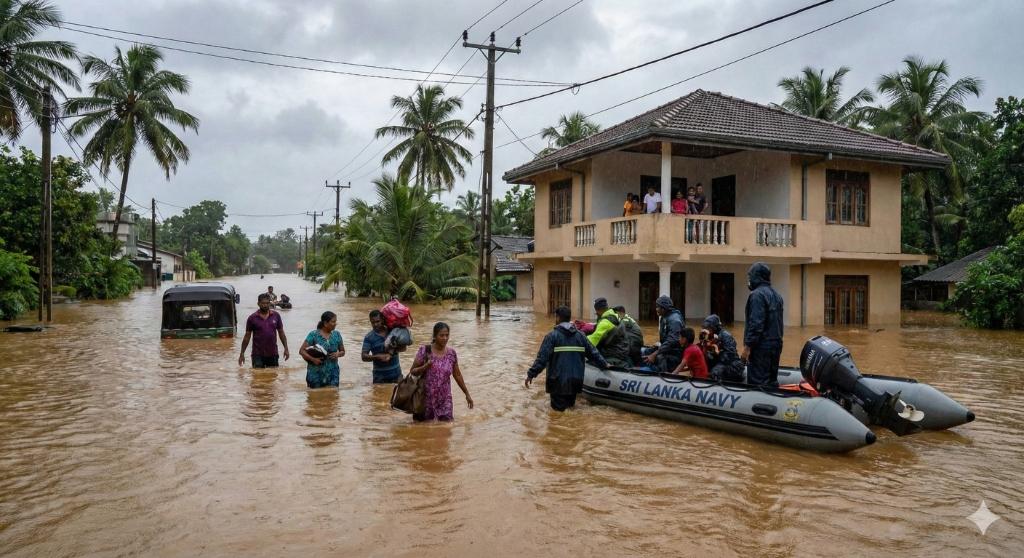
Sri Lanka is currently facing severe flooding and landslides triggered by Cyclone Ditwah. Government offices and schools have been closed, and widespread transportation disruptions are occurring, particularly in the Central Province and parts of the Western Province.
Urgent Safety Warning
If you are in an affected region, please follow the instructions of local authorities immediately. Stay away from floodwaters and landslide-prone areas.
Quick Overview: Alerts & Transport Closures
The following table summarizes the key information on alerted areas and transportation closures as of today.
| Category | Details |
|---|---|
| Alerted Areas |
|
| Closed/Disrupted Transport |
|
Current Status Overview
The situation remains serious as of November 28, 2025, with rescue operations actively underway.
Casualties and Damage
Tragically, the death toll has risen to 69. Over 18,000 people have been moved to temporary shelters, and thousands of homes have been damaged by the rising waters and landslides.
Government Response
The Sri Lankan government has allocated emergency funds for disaster relief and is conducting large-scale rescue operations involving the army, navy, and air force. Helicopters and boats are being deployed to rescue stranded people in inaccessible areas.
Ongoing Risks
Meteorological authorities have forecast further heavy rainfall. There are warnings that flood levels could surpass those of the major 2016 flood event if the rain continues. Residents in low-lying areas are urged to be vigilant and ready to evacuate at short notice.
Travel Advice
If you must travel during this time, please exercise extreme caution. Avoid flooded roads and do not attempt to cross moving water.
- Check local news for real-time road closure updates.
- Keep emergency contacts handy.
- If you need safe, reliable transportation for urgent travel or evacuation to safer areas, contact professional services that are monitoring safe routes.
District-by-District Road Status
During Cyclone Ditwah, road conditions varied significantly by district. Understanding which routes were affected helps travellers and residents plan safe alternatives.
- Colombo District: Low-lying roads in Kelani River flood plain — including sections of Baseline Road and Kolonnawa — were impassable. The E01 Southern Expressway remained open throughout.
- Gampaha District: Roads around the Deduru Oya and Ma Oya rivers were flooded. BIA Airport access via the expressway remained functional, though with reduced speed limits.
- Badulla District: Multiple landslides blocked the Badulla–Bandarawela road (A16) and Ella–Wellawaya road (A23). Hill country routes required 48–72 hours for clearance.
- Nuwara Eliya District: Landslides on Hatton–Norwood road and Ambewela sections. Train services from Kandy to Badulla suspended for 5 days.
- Ratnapura District: Kalu Ganga river reached critical levels. Ratnapura town roads flooded; Embilipitiya route impassable for heavy vehicles.
How Our Taxi Service Responded
Throughout the Cyclone Ditwah flood event, our dispatch team monitored road conditions in real time using DMT (Department of Meteorology) alerts, police road closure announcements, and driver reports from the field. Several measures were implemented immediately:
- Route Re-planning: All active bookings were assessed. Where booked routes were flooded, drivers were redirected via alternative roads — even if significantly longer — to ensure safe delivery.
- Proactive Passenger Communication: Passengers with upcoming bookings in affected zones were contacted 6–12 hours in advance with route updates and revised ETAs.
- Airport Run Prioritisation: BIA-bound travellers were given priority dispatch with expressway routing to avoid urban flood zones around Colombo.
- Driver Safety Protocols: No driver was dispatched on routes rated unsafe by local police. Driver welfare took precedence over booking completion during peak flood hours.
Post-Flood Taxi Availability — Recovery Phase
As flood waters recede and roads are cleared, taxi service restores by zone. Colombo city typically recovers within 24–48 hours of rainfall stopping. Hill country routes in Badulla, Nuwara Eliya, and Kandy districts may take 3–7 days for full road clearance after major landslides.
We recommend pre-booking post-flood taxis 24–48 hours ahead rather than relying on on-demand availability, as driver dispatch capacity is temporarily reduced while some vehicles are engaged in relief transport or blocked in flooded zones.
Current status updates are posted on our WhatsApp broadcast channel. Travellers can message our dispatch number for real-time route availability before confirming a booking during or after severe weather events.
Preparing for Sri Lanka's Monsoon Seasons
Sri Lanka experiences two monsoon seasons: the Southwest Monsoon (May–September) affecting the south and west, and the Northeast Monsoon (October–January) affecting the north and east. The most severe flooding typically occurs during the transition between these seasons — October–November — when both monsoon systems can interact, as happened with Cyclone Ditwah.
Travellers visiting Sri Lanka during November and December should book transport with 48-hour notice, avoid booking routes through known flood plains (Kelani River basin, Kalu Ganga), and maintain emergency contact details for their taxi operator. Flexible itineraries that can adjust for weather delays are strongly recommended during peak flood season.
Frequently Asked Questions About Flooding and Travel in Sri Lanka
Need Urgent Transportation?
Our drivers are updated on safe routes. Contact us for emergency transport assistance.
Call 24/7 Hotline: +94 765 603 961