
Sri Lanka Food Tours: A Culinary Journey in Colombo
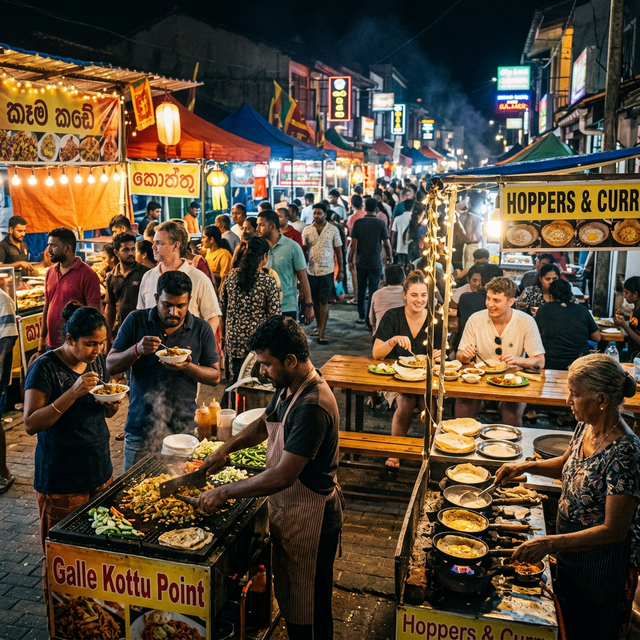
Sri Lankan cuisine is a complex collision of flavors. Influenced by centuries of spice trading, colonial rule (Portuguese, Dutch, and British), and its proximity to South India, the food here is fiery, deeply savory, and incredibly diverse. The best place to dive into this culinary melting pot is right in the bustling streets of its commercial capital, Colombo.
The Essentials of Colombo Street Food
A food tour in Colombo is an assault on the senses—in the best way possible. Here are the absolute must-try dishes:
- Kottu Roti: The undisputed king of Sri Lankan street food. It’s a rhythmic dish made by violently chopping godamba roti (flatbread) on a hot metal griddle with vegetables, egg, meat, and a heavy dose of spicy curry gravy. You usually hear a kottu stall before you see it!
- Hoppers (Appa): A bowl-shaped pancake made from fermented rice flour and coconut milk. Crispy on the edges and soft in the middle, they are enjoyed sweet (with palm treacle) or savory (with a fried egg baked into the bottom and spicy onion sambol).
- Isso Vadai: The quintessential beach snack, best enjoyed on Galle Face Green at sunset. These are deep-fried lentil patties topped with spicy, crispy prawns.
- Lamprais: A legacy of the Dutch Burghers. It is a labor-intensive dish consisting of rice boiled in meat stock, accompanied by a specific meat curry, frikkadels (meatballs), blachan (shrimp paste), and ash plantain, all wrapped and baked in a banana leaf.
Where to Go
While you can find good food everywhere, certain areas are famous for specific culinary experiences:
- Galle Face Green: The ultimate evening spot for Nana’s street food tents. Great for seafood, kottu, and soaking in the ocean breeze alongside local families.
- Aluthkade (Hultsdorf): The heart of Colombo’s Muslim street food scene. Head here late at night for incredible barbecue, shawarma, and rich, meaty curries.
- Pettah Market: Perfect for daytime snacking. Try the fresh tropical fruits, sweet falooda, and 'short eats' (savory pastries) from local bakeries.
Navigating the City Food Scene
Colombo's traffic can be chaotic, and finding parking near popular food stalls is notoriously difficult. If you want to seamlessly hop between the best food spots without the stress of navigating, consider booking a city taxi or private driver for the evening. Your driver can act as an impromptu guide, ensuring you hit the safest and most delicious spots in town.
Book Your Reliable, Fixed-Rate Sri Lanka Airport Taxi Now
Travel with Peace of Mind!
Book Now: +94 765 603 961Sri Lankan Cuisine — What Makes It Distinctive
Sri Lankan food is frequently confused with South Indian cuisine, but it has a character entirely its own. The foundational difference is the use of roasted coconut — grated, toasted until dark brown, then ground into a paste that forms the base of many curries. This technique, combined with Sri Lanka's unique spice profile (goraka/gamboge for sourness, pandan leaf for fragrance, Maldive fish for umami depth), produces curries that are simultaneously richer, darker, and more layered than their Indian counterparts.
Rice and curry is the quintessential Sri Lankan meal — a mound of red or white rice surrounded by four to eight small dishes: a meat or fish curry, dhal, a coconut sambol, a vegetable mallum, and various pickles and condiments. The meal is traditionally eaten with the right hand, mixing curries into the rice on the banana leaf. Colombo's restaurant culture has become genuinely exciting since 2022, with modern Sri Lankan cuisine chefs gaining international recognition.
Must-Try Street Foods and Where to Find Them
Street food in Sri Lanka is cheap, abundant, and — in the right places — outstanding. Kottu roti, arguably the island's most iconic street food, is made by chopping stale flat roti on a hot griddle with eggs, vegetables, and your choice of meat or seafood. The rhythmic clanging of the chopping blades is the sound of Sri Lankan evenings. Colombo's Pettah market area, Kandy's central market, and any town's evening street stalls are the best places to find it.
- Kottu roti: Rs 350–700 depending on filling — beef and egg is most popular
- String hoppers (indi appa): Steamed rice noodle discs, best at breakfast with coconut milk curry
- Hoppers (appa): Bowl-shaped rice flour pancakes — egg hoppers with pol sambol are unmissable
- Isso wade: Deep-fried lentil patties topped with a whole prawn — Rs 150–250 each
- Pol roti: Flatbread with grated coconut, cooked on a griddle — Rs 50–80
- King coconut (thambili): Orange coconut with natural electrolyte water — Rs 80–120 roadside
Food Tours and Cooking Experiences
Colombo now has several organised food tours covering the city's diverse culinary geography — from the Muslim-run biriyani houses of Pettah to the Tamil-run breakfast spots of Bambalapitiya to the upscale modern Sri Lankan restaurants of Colombo 3. Colombo Food Tours and Taste of Sri Lanka are established operators offering 3–4 hour walking or tuk-tuk tours for Rs 6,000–9,500 per person.
For those who want to learn to cook rather than just eat, cooking classes in Kandy are highly recommended. A private taxi from Colombo to Kandy for a cooking class day trip, with a driver who can recommend street food stops en route, is an excellent way to combine both experiences. Call +94 765 603 961 to arrange transport for food-focused itineraries.
Regional Food Variations Across Sri Lanka
Sri Lanka's cuisine varies significantly by region, reflecting the island's ethnic and geographic diversity. Colombo, with its Sinhalese, Tamil, Muslim, and Burgher communities, has the most diverse food scene — Malay-influenced lamprais (rice and meats baked in a banana leaf), Muslim-style biriyani in Pettah, and Tamil breakfast hoppers in Wellawatte all exist within a few kilometres of each other. The north (Jaffna) has its own distinctive Tamil cuisine — heavily influenced by South India, using more tamarind, sun-dried fish, and palmyra palm products. Jaffna crab curry is nationally famous.
The coastal communities — from Negombo's fishing catholics to Galle's spice-trading Muslim families — have integrated Portuguese, Dutch, and British influences into their cooking in ways invisible elsewhere in Asia. Negombo's fish stalls and the Dutch-influenced breudher (a rich festive bread) found in Burgher homes are worth seeking out. For food-focused travellers, spending at least one day in Colombo and one on the south coast reveals how dramatically Sri Lankan cuisine shifts even over 100 km.