
Kite Surfing Kalpitiya: Riding the Wind
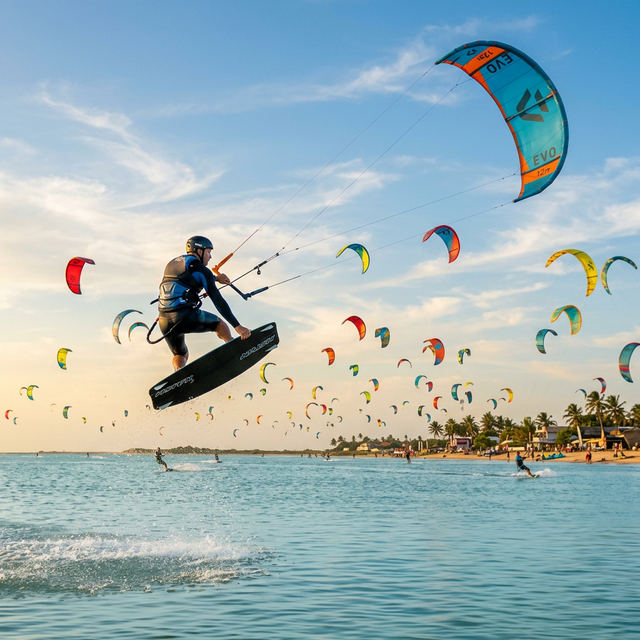
Jutting out into the Indian Ocean on Sri Lanka’s northwest coast, the Kalpitiya peninsula is a windswept paradise. Thanks to unique geographical funnels, it experiences some of the most consistent winds in Asia, making kite surfing in Kalpitiya a world-class experience.
The Magic of the Lagoon
Kalpitiya is unique because it offers two radically different riding environments separated by just a strip of sand.
- The Lagoon: Inside the sandbar, the water is butter-flat, shallow, and safe. This makes it an unparalleled playground for complete beginners taking lessons or professional freestylers practicing huge, unhooked jumps.
- The Ocean: Walk over the sand dune, and you are facing the Indian Ocean, offering wave riding downwinders along miles of unbroken coastline.
The Two Wind Seasons
Kalpitiya blessedly has two main windy seasons:
- Summer (May to October): Strong, consistent south-west winds blowing 18-25+ knots daily. It rarely rains during this period.
- Winter (December to March): Afternoon thermal north-west winds, usually slightly lighter (15-20 knots), but accompanied by beautiful sunny weather.
Getting There with Gear
Kalpitiya is about a 2.5 to 3-hour drive north of Colombo Airport. Kitesurfing gear bags (containing kites, twin-tips, and harnesses) are massive and heavy. Book a spacious private vehicle to ensure your expensive gear reaches your kite camp safely and comfortably.
Book Your Reliable, Fixed-Rate Sri Lanka Airport Taxi Now
Travel with Peace of Mind!
Book Now: +94 765 603 961What to Expect on Your First Day
Arriving in Kalpitiya for the first time, most visitors are struck by the sheer scale of the lagoon. The Dutch Bay stretches for over 35 km, and on a good wind day you will see a dozen kites in the air at once. Most schools start beginners on a trainer kite on the beach before moving to a body drag in shallow water — the entire process takes around two hours before you are on a board. Instructors at established schools like Kite Zone and Sri Lanka Kitesurf hold IKO certifications and conduct lessons entirely in English.
Equipment rental is included in most lesson packages. Expect to pay Rs 8,000–12,000 for a half-day beginner session including kite, board, harness, and wetsuit. Full-day packages for intermediate riders average Rs 15,000–18,000. The lagoon bottom is sandy and shallow for most of the kiteable area, making it forgiving for beginners who fall frequently.
Where to Stay in Kalpitiya
Accommodation in Kalpitiya ranges from beachside guesthouses charging Rs 3,500–6,000 per night to mid-range eco lodges at Rs 9,000–15,000. The Kalpitiya Lagoon Resort and Palagama Beach are the most established options, with in-house kite schools and equipment storage. Most kitesurfers stay on the peninsula itself rather than in Kalpitiya town, as the beach camps are closer to the launch points.
The nearest major town with ATMs and supermarkets is Puttalam, about 35 km south. Stock up on supplies before heading to the peninsula — options on the beach are limited and priced accordingly. Many riders stay for a week or more during peak season, turning the beach camps into a small international community of wind-chasers.
- Book accommodation at least 2 weeks ahead during January–March peak season
- Most camps offer free transport from Puttalam junction
- Ask about package deals that include accommodation, lessons, and meals
- Electricity can be intermittent — charge devices and batteries during the day
Getting to Kalpitiya from Colombo
Kalpitiya is approximately 160 km north of Colombo, a drive of around 3.5 hours. The most direct route takes the A3 highway north through Negombo and Chilaw, then turns inland towards Puttalam before heading west to the peninsula. There is no direct train service — the nearest station is Puttalam, from where a three-wheeler or private vehicle is needed for the final 35 km. A private taxi from Colombo to Kalpitiya is the most comfortable option, especially if you are travelling with kite equipment. Our taxis can accommodate board bags and equipment without extra charge — call +94 765 603 961 to arrange a pickup from your Colombo hotel or the airport.
Kalpitiya vs Arugam Bay for Kitesurfing
Sri Lanka has two main kitesurfing destinations — Kalpitiya on the northwest coast and Arugam Bay on the east. Kalpitiya's lagoon is the superior learning environment: the water is flat and shallow, winds are consistent and cross-onshore, and the kite schools are clustered within 2 km of each other. Arugam Bay offers ocean-based kitesurfing with choppier conditions better suited to advanced riders and those who want to combine surfing with kitesurfing on the same trip.
If you are a beginner or intermediate rider specifically visiting Sri Lanka for kitesurfing, Kalpitiya is the right choice. The lagoon allows long runs without obstacles, wipeouts are gentle, and the kitesurfing infrastructure — schools, gear shops, physiotherapists — is far more developed than on the east coast.
Practical Information — Cash, Connectivity, and Safety
Kalpitiya peninsula has limited ATM access — the nearest reliable cash machines are in Puttalam town, 35 km south. Withdraw sufficient rupees before leaving Colombo or Negombo. Mobile data coverage on Dialog 4G is reasonable on the main peninsula but patchy on the outer Dutch Bay area. Most kite schools have Wi-Fi but speeds depend on the provider.
Kitesurfing carries genuine physical risks. Ensure you only train with IKO-certified instructors at recognised schools. Never kite alone as a beginner. The lagoon has shallow sections with exposed coral and rock near its edges — stay in the main sandy channel. Insurance: most standard travel insurance excludes 'extreme sports' by default; add a water sports rider before travel if available.