
Backpacking Route Sri Lanka: The 14-Day Itinerary
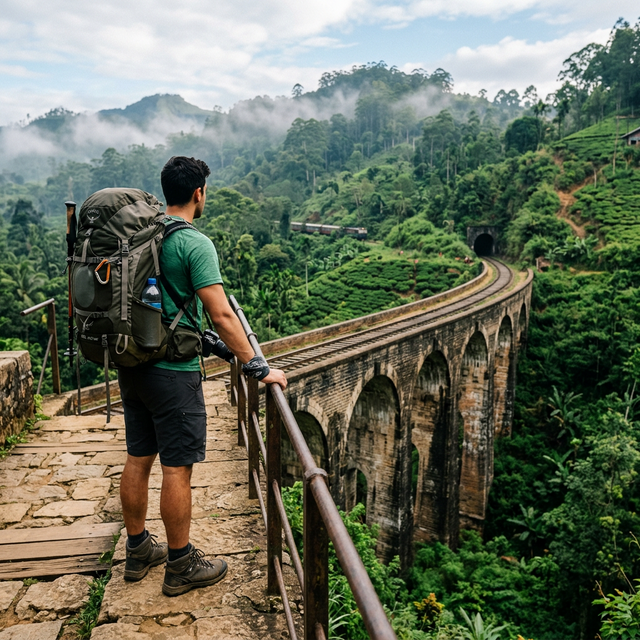
Because Sri Lanka offers ancient ruins, mist-covered mountains, wildlife safaris, and tropical beaches all within a relatively small geographic area, planning an itinerary can induce severe FOMO (Fear Of Missing Out). If you have two weeks, this is the classic, heavily tested backpacking route for Sri Lanka.
Days 1-4: The Cultural Triangle
Skip Colombo and head straight north from the airport.
- Base yourself in Dambulla or Sigiriya.
- Spend one day climbing the iconic Sigiriya Rock Fortress at dawn.
- Spend the next day renting a bicycle and exploring the sprawling ancient ruined city of Polonnaruwa.
Days 5-8: Kandy and the Hill Country
Head south into the mountains.
- Spend one night in Kandy to view the Temple of the Sacred Tooth Relic.
- The next morning, board the famous blue train from Kandy to Ella. This 7-hour journey through the tea plantations is considered one of the most beautiful train rides on earth.
- Spend two days in Ella hiking Little Adam's Peak and visiting the Nine Arch Bridge.
Days 9-14: Safaris and Surf
Descend from the mountains to the deep south.
- Stop for one night near Yala or Udawalawe National Park for an early morning jeep safari to spot elephants and leopards.
- Spend your remaining days beach-hopping along the South Coast—surfing in Weligama, relaxing in Unawatuna, and exploring the historic Galle Fort before heading back to the airport.
To maximize this 14-day loop and stop precisely when you want, bypass the slow public buses. Book point-to-point private taxis for the longest legs of your journey.
Book Your Reliable, Fixed-Rate Sri Lanka Airport Taxi Now
Travel with Peace of Mind!
Book Now: +94 765 603 961The Classic Backpacker Loop — 14 Days
Sri Lanka's most popular backpacker route forms a rough circuit of the island's highlights, typically starting and ending in Colombo. The standard 14-day loop runs: Colombo → Negombo (1 night, base for beach and departure) → Sigiriya/Dambulla (2 nights, Cultural Triangle) → Kandy (2 nights, temples and hill country gateway) → Ella (3 nights, trains, hiking, Nine Arches) → Mirissa (2 nights, beaches and whale watching) → Galle (2 nights, Fort) → Colombo (1 night, departure). This covers the major drawcards without feeling rushed.
Budget accommodation on this route averages Rs 2,500–5,000 per night for a dormitory bed, Rs 4,500–9,000 for a private room in a guesthouse. Colombo and Galle are more expensive; Ella and Sigiriya offer excellent value. The famous Ella to Kandy train (book at least 2 weeks ahead for reserved class seats) is one of Asia's great rail journeys — budget Rs 800–1,200 for 2nd class reserved.
Backpacker Budget Guide — Daily Costs in LKR
Sri Lanka is genuinely affordable by Asian standards, though costs have risen since 2022. A realistic daily budget depends heavily on your travel style.
- Ultra budget (dorm, street food, public transport): Rs 4,000–6,000/day
- Mid-range (private room, local restaurants, occasional taxi): Rs 9,000–14,000/day
- Comfort (en-suite guesthouse, restaurant meals, private transport): Rs 18,000–28,000/day
- Street food meal: Rs 200–600 | Restaurant meal: Rs 1,200–2,500
- Local beer (Lion): Rs 500–700 | Coconut from road stall: Rs 100
- Tuk-tuk short ride: Rs 150–300 | Intercity bus: Rs 150–500
Transport Tips for Backpackers
Public buses and trains cover most of the main backpacker route at very low cost but can be crowded and slow. The main exceptions where a private taxi or tourist cab makes sense: airport arrivals and departures (buses don't serve the terminal well), beach towns not on rail lines (Mirissa, Tangalle, Kalpitiya), and when travelling in a group of 3+ where splitting a taxi beats individual bus tickets. Call +94 765 603 961 for shared rates on popular backpacker routes — group taxi bookings often cost less than you expect.
Money, Safety, and Practical Tips
Sri Lanka is one of Asia's safest destinations for solo travellers, including women travelling alone. Petty theft exists as in any tourist destination but violent crime against tourists is extremely rare. The main scam to be aware of is the gem scam in Colombo and Ratnapura — friendly strangers who invite you to their uncle's gem shop promising wholesale prices. Politely decline all such invitations regardless of how genuine they seem.
Currency: carry a mix of LKR cash and a debit card with good foreign exchange rates (Wise and Revolut work well in Sri Lanka). Most ATMs accept Visa and Mastercard but withdrawal limits are often Rs 20,000–30,000 per transaction. Bank ATMs in Colombo and Kandy give the best rates; hotel exchange desks are the worst. Many mid-range guesthouses now accept card payments; street food and transport is almost always cash only.
- SIM cards: Dialog and Mobitel offer tourist SIMs from Rs 500 with 10GB data at the airport
- Drinking water: buy 1.5L bottles for Rs 80–120; tap water is not safe to drink
- Tuk-tuks: always agree the fare before getting in, or insist on the meter in Colombo
- Power: Sri Lanka uses UK-style 3-pin square plugs (Type G); bring an adapter
Avoiding Common Backpacker Mistakes in Sri Lanka
The most common mistake is underestimating distances and transit times. Sri Lanka is small (65,000 sq km) but roads are slow — 100 km can take 3 hours. Attempting to visit Sigiriya, Kandy, and Ella in two days is exhausting and means arriving at each place too tired to enjoy it. Build in at least two nights per location. The second most common mistake is pre-booking too many things — Sri Lanka rewards flexibility. Hotels (except Ella in high season) rarely need advance booking more than 2–3 days ahead.
Tuk-tuks are the primary short-distance transport on the backpacker trail. Always agree the fare upfront in smaller towns — Rs 150–300 for a 2–3 km ride is fair. In Colombo, insist on the meter or use PickMe app (Sri Lanka's answer to Uber). On longer journeys between towns, a private taxi shared between three or four travellers often costs the same as individual bus tickets and is dramatically more comfortable.